
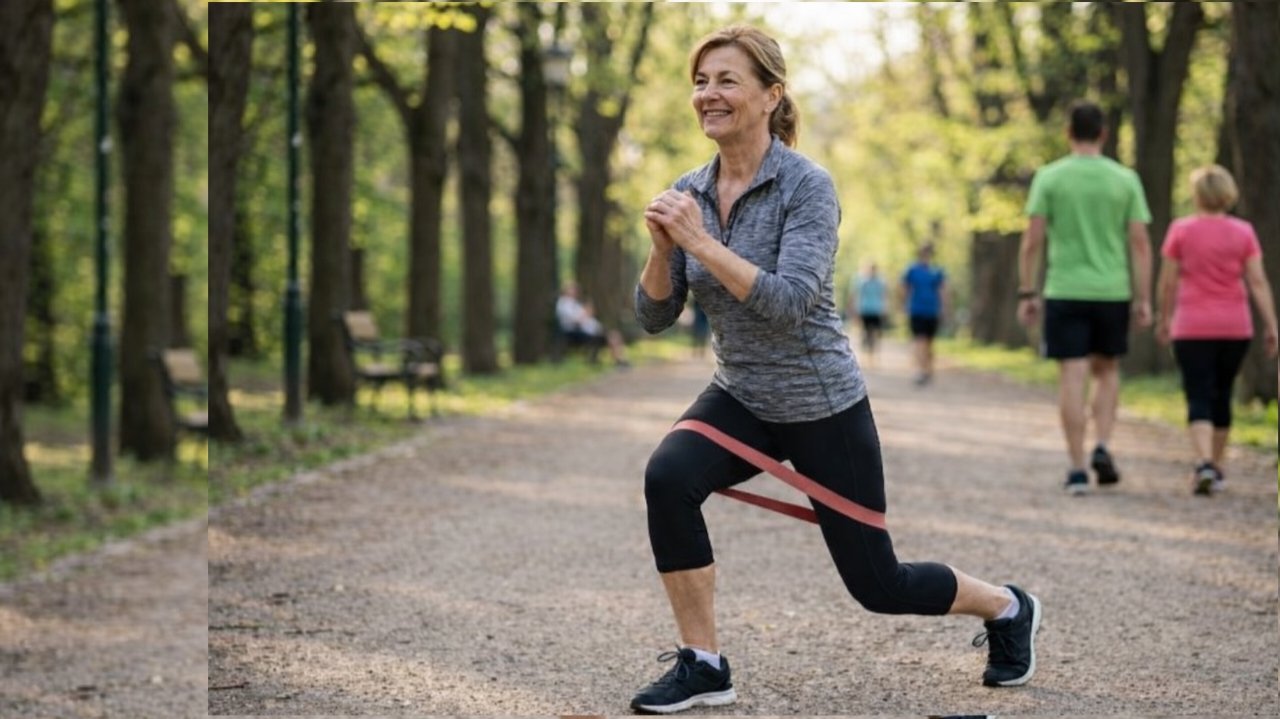
Modern fitness culture often celebrates strain and sweat, but the body, especially as it ages, responds beautifully to consistency rather than force. Walking, when done with awareness, becomes more than movement. It becomes a quiet conversation between balance, muscle, breath, and confidence.
Walking With Intention, Not Autopilot
Many of us walk absent-mindedly — from kitchen to garden, from car park to shop — barely aware of how the body moves. But when walking becomes intentional, something shifts. The legs no longer simply carry weight; they begin to generate strength.
Pushing gently through the ground with each step activates the larger muscles of the hips and thighs, particularly the glutes, which often weaken with age. Biomechanics research suggests that purposeful walking increases neuromuscular engagement, improving both coordination and endurance. It is not about walking faster, but about walking with awareness chest open, shoulders soft, breath steady, steps deliberate.
Over time, this mindful engagement rebuilds the body’s natural stability — the kind that supports everyday movements like climbing stairs, rising from a chair, or walking confidently across uneven pavement.
The Subtle Power of Walking Uphill
Inclines introduce resistance in the most natural way. Unlike gym machines, which isolate muscle groups, uphill walking requires the whole body to cooperate. The calves work harder, the thighs engage more deeply, and the hips extend further a key factor in maintaining lower-body strength as we age.
There is also a psychological shift when walking uphill. The body senses effort, but the mind recognises progress. Even a short incline can awaken muscles that flat walking rarely challenges. Studies on ageing and mobility show that incline walking supports cardiovascular health while strengthening stabilising muscles essential for balance.
It is less about conquering hills and more about allowing gentle resistance to remind the body what it is capable of.
Relearning the Push-Back Motion
One subtle change that transforms walking strength is focusing less on stepping forward and more on pushing backward. This movement activates the posterior chain — the muscles along the back of the body, including the glutes and hamstrings, which play a vital role in posture and mobility.
With age, many people develop shorter, more cautious steps. While understandable, this often reduces hip extension and gradually weakens the muscles responsible for forward propulsion. By consciously pushing the ground behind you, even gently, the body relearns a stronger, more efficient walking pattern.
It is a small adjustment, barely visible from the outside, yet deeply effective from within.
The Role of Changing Pace
Life rarely moves at a constant speed, and neither should walking. Introducing brief moments of slightly quicker steps not a sprint, simply a purposeful increase challenges both muscles and heart in a balanced way.
Interval-style walking has been shown to improve muscular endurance and cardiovascular resilience, especially in midlife and beyond. These gentle surges encourage stronger push-off, better arm swing, and improved rhythm between breath and movement.
Just as importantly, varying pace keeps the mind engaged. Walking becomes less mechanical and more alive a moving meditation rather than a routine.
Strength in Slowing Down: The Value of Downhill Walking
Descending, surprisingly, may be as important as climbing. When walking downhill slowly and with control, muscles lengthen while resisting gravity a process known as eccentric loading. This type of muscle work is particularly beneficial for joint stability and resilience.
Controlled downhill walking strengthens the thighs and improves coordination, helping reduce the risk of stumbles or falls. There is also a quiet emotional benefit in slowing down intentionally. The body becomes more aware, more present, more grounded in each step.
Rather than rushing downhill, the act of resisting gravity gently reminds the body of its own control and capability.
Ending With Posture and Presence
Fatigue often reveals itself in posture shoulders rounding, steps shortening, gaze dropping towards the ground. Finishing a walk with conscious posture helps reinforce healthy movement patterns, even when the body begins to tire.
Standing taller, allowing the arms to swing naturally, and lifting the gaze forward restores alignment between spine, breath, and stride. Over time, this simple awareness carries into everyday life — improving not just walking, but standing, sitting, and moving through the world with quiet assurance.
Posture, after all, is not merely physical. It reflects energy, confidence, and how we feel within ourselves.
Also Read – Goodbye Balayage: The New Technique That Eliminates Grey Hair for Good
11 Trending Nail Polish Colours Everyone Is Choosing This Winter for a Fresh Updated Look
Goodbye Dry Lips: Kitchen Oil Balm Recipe for Soft, Hydrated, Naturally Plump Pout
Goodbye Hair Dyes: The Viral Grey Hair Trend Making Natural Coverage Look Youthful Again
Why Creamy Vanilla Gloss Nails Are the Soft Nude Trend Everyone Is Choosing This Winter
14 Yoga Poses That Help Open Tight Hips and Improve Mobility
10-Minute Yoga Flow: A Short Routine That Improves Flexibility and Keeps the Body Mobile
5 Yoga Poses That Help Reduce Belly Fat Slowly
Walking as a Form of Emotional Stability
Beyond muscles and joints, walking nurtures something less visible but equally important emotional steadiness. Research in psychology consistently links rhythmic walking with reduced anxiety, improved mood, and clearer thinking. The repetitive, bilateral motion of walking appears to soothe the nervous system, creating a gentle sense of calm.
For many over 50, walking becomes more than exercise. It becomes space to think, to breathe, to process, to reconnect with oneself. Strength, in this sense, is not only physical but emotional a growing sense of trust in one’s own body.
There is no finish line in this kind of movement. No performance, no comparison. Only quiet progress.
And perhaps that is the true beauty of walking. Not dramatic transformation, but steady renewal. Step by step, the body remembers its strength. The mind softens. Confidence returns quietly, almost unnoticed until one day, the walk feels lighter, steadier, and somehow, more like coming home to yourself.