
 A bathroom mirror. A shop window. The overhead glow in a changing room that makes everything feel a little too honest. You lean in, tilt your head, and there it is again — a thin silver line where your part has shifted just enough to reveal what wasn’t there a few years ago.
When Balayage Stops Feeling Like a Solution
Balayage earned its reputation for a reason. Painted highlights softened regrowth, stretched appointments, and made hair look sunlit rather than dyed. For early greys, it was almost magic. A silver strand could disappear into lighter ribbons. A harsh line never had a chance to form.
The problem comes later. Not all at once — slowly, almost politely.
Grey hair doesn’t appear evenly. It clusters. Temples first. Then the part. Sometimes a bright streak at the front while the rest of the head stubbornly holds on to pigment. Balayage, which focuses on mid-lengths and ends, starts to feel disconnected from what’s happening at the scalp.
Clients describe the same frustration in different ways. “It looks great… until it doesn’t.” “I love it for a month, then suddenly I hate my roots.” “I feel like I’m always waiting for my next appointment.”
A Shift That Starts at the Roots
The newer technique quietly replacing balayage for grey management begins where balayage rarely does: right at the scalp.
Instead of painting lightness through the lengths and hoping the roots behave, colourists are paying close attention to where grey hair actually lives. They study the pattern before they mix a single bowl of colour.
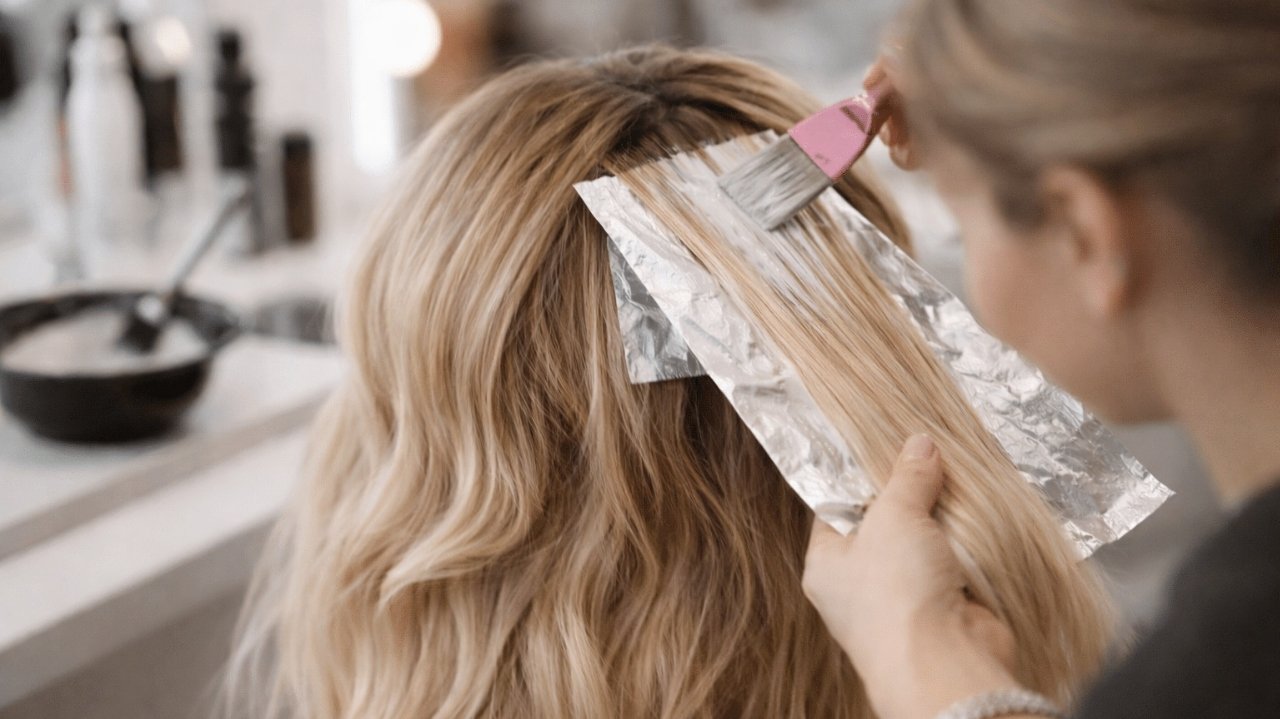
Ultra-fine micro-weaves are placed directly into those grey-prone zones — not thick highlights, not bold coverage, but barely-there threads of colour designed to soften contrast rather than mask it. Over this, a customised blending shade is smudged at the root, connecting pigmented and non-pigmented hair without creating a visible boundary.
Why Grey Hair Behaves Differently
Grey hair isn’t just darker hair turned white. Without melanin, strands can appear more translucent, sometimes coarser, sometimes resistant. Colour that once blended seamlessly can suddenly sit flat or fade unevenly.
This newer method uses multiple soft formulas rather than one strong shade — a base tone to reduce contrast, micro-weaves for depth, and a translucent gloss to unify everything without fully erasing the silver.
Living With the Grow-Out, Not Against It
The real test of any colour isn’t how it looks leaving the salon, but how it behaves weeks later. People who switch to this grey-neutralising approach often notice something unexpected: the panic moment never arrives.
There’s no sudden day when roots look “bad.” The grey grows softly, woven into the design rather than standing apart from it.
One client even cancelled an appointment she thought she would need, later admitting she kept waiting for her hair to annoy her — but it never did.
How This Differs From Classic Balayage
Balayage and this newer technique answer different questions. Balayage focuses on natural lightness through the lengths. The newer approach focuses on emotional ease at the root and softer regrowth over time.
For many, that means fewer urgent salon visits, longer gaps between appointments, and a relationship with the mirror that feels less confrontational.
A Cultural Shift
Across the UK, beauty routines are changing. People are rethinking maintenance-heavy colour cycles and choosing approaches that feel more sustainable and natural over time.
Grey hair is no longer just something to hide — it’s something to work with.
Who This Approach Suits
- People with visible grey at the temples or part line
- Anyone tired of frequent root touch-ups
- Those wanting softer, more natural ageing
- People preferring subtle colour over dramatic change
When the Mirror Feels Quieter
There’s relief in no longer bracing yourself before looking closely. Hair becomes something that quietly moves with your life instead of interrupting it.
Balayage had its era. But for many navigating visible grey hair today, salons are offering something gentler not a battle, but a balance.