
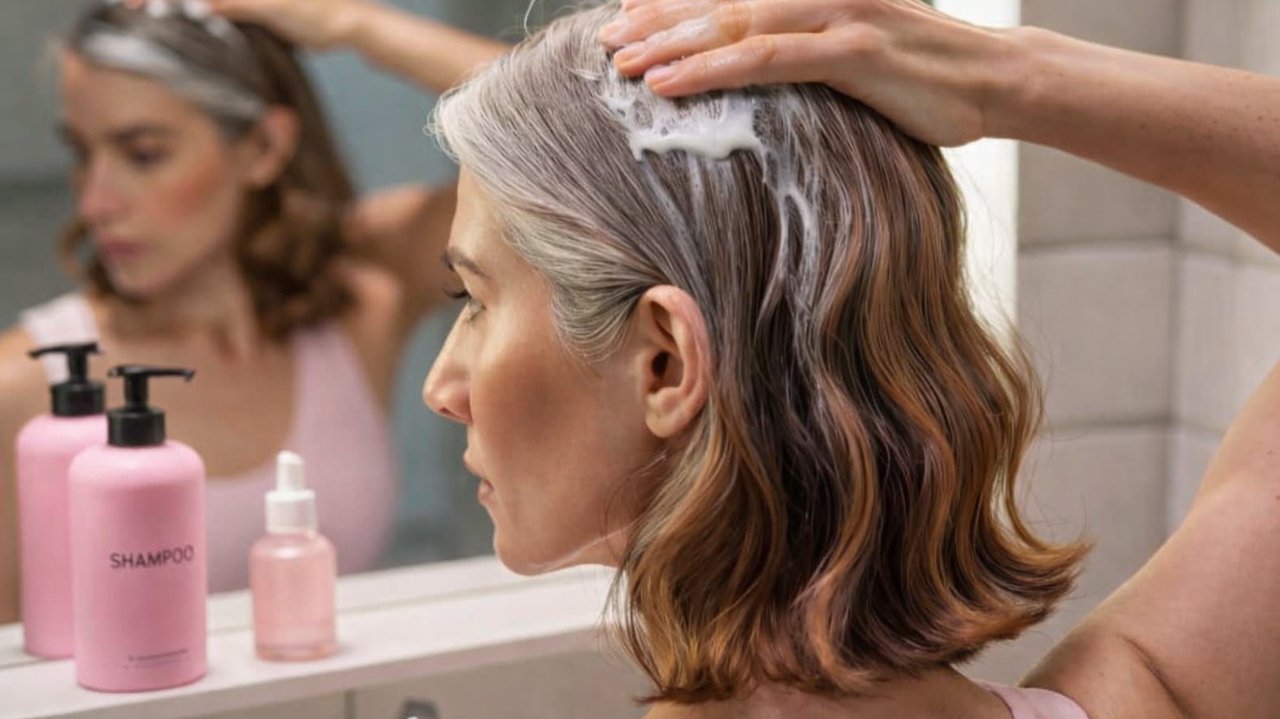
For some, it feels natural. For others, it raises a simple question: Is there a gentle way to support my natural hair color without harsh dyes or constant upkeep? Recently, many people have started exploring a surprisingly simple idea — enhancing their everyday conditioner with a few targeted ingredients to support the scalp and hair’s natural pigmentation.
When Grey Hair Begins to Tell a Story
Grey hair rarely arrives suddenly. It tends to appear slowly, often during periods of stress, lifestyle shifts, or natural aging. At the root of this change are melanocytes — the tiny cells responsible for producing pigment in the hair. When these cells slow down or become less active, new hair grows with less color, eventually appearing grey or white.
This process is influenced by several factors: oxidative stress, nutritional balance, hormonal changes, and overall scalp health. While greying is a natural part of life, early or uneven greying sometimes encourages people to look for gentle, supportive solutions rather than strong cosmetic fixes.
The Conditioner Add-In Method People Are Exploring
The idea is simple and fits easily into a routine most people already follow. Instead of using harsh coloring products, a small amount of pigment-supporting oil or serum is mixed into a regular conditioner and applied directly to the scalp and roots.
Commonly used add-ins include copper peptide serums, rosemary oil, amla oil, and antioxidant-rich scalp drops. These ingredients are chosen not to “color” the hair instantly, but to support the environment where pigment naturally forms — the hair follicle itself.
After washing, a small portion of conditioner is blended with a few drops of the chosen add-in. The mixture is gently massaged into the scalp for a minute or two, then left on for several minutes before rinsing lightly. Over time, some people notice softer greys, slightly deeper tones near the roots, or new growth appearing less starkly white.
Setting Realistic Expectations
It is important to approach this method with patience and clarity. Hair that has been fully white for many years is unlikely to regain strong pigment quickly, if at all. Biology tends to work gradually, not dramatically.
However, in cases where greying is recent or linked to stress or lifestyle imbalance, some individuals report subtle improvements in new hair growth over several weeks or months. The change, when it happens, is often gentle rather than dramatic — a softening of contrast rather than a full return to previous color.
Consistency, overall health, and scalp care play a larger role than any single ingredient.
Practical Tips for Trying the Method
- Start with a small amount of oil or serum mixed into conditioner once or twice weekly
- Always patch test before applying new ingredients to the scalp
- Focus application on the root area rather than hair length
- Continue consistently for at least 8–12 weeks
- Maintain balanced nutrition, including minerals like copper and zinc
- Support results with good sleep and reduced chronic stress
Also Read – Goodbye Balayage: The New Technique That Eliminates Grey Hair for Good
11 Trending Nail Polish Colours Everyone Is Choosing This Winter for a Fresh Updated Look
Goodbye Dry Lips: Kitchen Oil Balm Recipe for Soft, Hydrated, Naturally Plump Pout
Goodbye Hair Dyes: The Viral Grey Hair Trend Making Natural Coverage Look Youthful Again
Why Creamy Vanilla Gloss Nails Are the Soft Nude Trend Everyone Is Choosing This Winter
14 Yoga Poses That Help Open Tight Hips and Improve Mobility
10-Minute Yoga Flow: A Short Routine That Improves Flexibility and Keeps the Body Mobile
5 Yoga Poses That Help Reduce Belly Fat Slowly
6 Daily Walking Exercises That Build Leg Strength Better Than Gym Machines After 50
A Softer Perspective on Grey Hair
Something shifts when the focus moves from “hiding grey” to “supporting natural hair.” The process becomes less about urgency and more about quiet care. Small rituals — a slower scalp massage, a mindful routine, steady consistency — often bring a sense of control rather than pressure.
Not everyone wants darker hair again. Some grow to appreciate the silver strands as part of their identity. Others prefer gentle ways to maintain their natural tone a little longer. Between these choices lies a simple truth: caring for the scalp and hair is less about reversing time and more about supporting what remains healthy.
Sometimes the result is visible, sometimes subtle, but the act of paying attention itself becomes part of the reward.
Key Point Summary
| Key Point | Detail | Value for Reader |
|---|---|---|
| Conditioner add-in method | Mixing pigment-supporting oils or serums into regular conditioner | Simple routine that supports natural hair environment |
| Realistic expectations | Works best on early or recent greys with consistent use | Helps avoid disappointment and encourages patience |
| Holistic support | Combines scalp care, nutrition, and lifestyle balance | Promotes overall hair and scalp health beyond cosmetics |
FAQ
Can grey hair naturally become darker again?
In some early cases, new hair growth may appear slightly darker or less stark, though long-standing white hair rarely regains full pigment.
Which ingredients are commonly used with conditioner?
Copper peptides, rosemary oil, amla oil, and antioxidant scalp serums are frequently chosen for their supportive properties.
How often should this method be used?
Two to four times per week is generally sufficient, with consistency over several months being more important than daily use.
Is this safe for sensitive scalps?
Most people tolerate it well if they perform a patch test and introduce new ingredients gradually.
Can it be used alongside colored hair?
Yes, some people use this approach between coloring sessions to support healthier, more balanced regrowth at the roots.