
Why Core Strength and Flexibility Matter in Everyday Movement
The core is not only about visible abdominal muscles; it is a deep system supporting the spine, balance and posture. Each time you bend, reach or stand, these muscles stabilise the body. When the core weakens, other areas — often the back or hips — take on extra strain. Strengthening it gently improves safety, balance and ease of motion.
Flexibility allows muscles and joints to move freely, reducing stiffness built from long sitting, stress or repetitive movement. A flexible body moves with less resistance, making everyday actions — turning, lifting, walking — feel smoother and more natural.
The Eleven-Minute Core and Flexibility Routine
1. Cat–Cow Pose (1 minute)
How to do it: Begin on hands and knees, wrists beneath shoulders and knees under hips. As you inhale, arch the back, lifting the chest and tailbone (Cow). As you exhale, round the spine, drawing the chin inward and engaging the abdomen (Cat).
Why it helps: This gentle flow warms the spine, improves back flexibility and softly activates the core muscles.
2. Downward-Facing Dog (1 minute)
How to do it: From all fours, lift the hips upward to form an inverted V-shape. Press the heels gently toward the floor and keep the head aligned between the arms.
Why it helps: The pose lengthens the hamstrings, calves and spine while engaging the entire body, supporting flexibility and core activation.
3. Plank Pose (1 minute)
How to do it: Move into a push-up position with hands under shoulders and body in a straight line from head to heels. Engage the core to keep the back flat and hips steady.
Why it helps: Plank strengthens the core, arms and legs simultaneously, building stability and endurance.
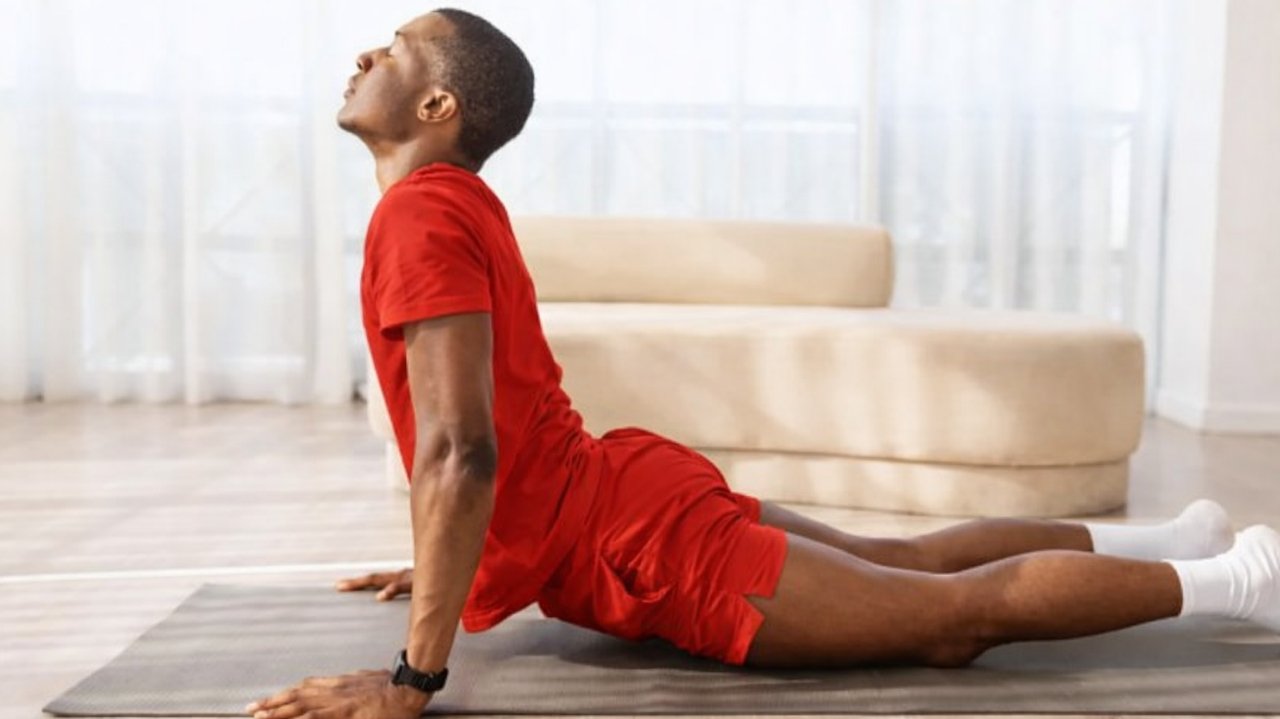
4. Cobra Pose (1 minute)
How to do it: Lie face down with hands beneath shoulders. Press gently into the palms and lift the chest, keeping elbows slightly bent and shoulders relaxed.
Why it helps: Cobra strengthens the lower back, stretches the chest and abdomen, and improves spinal flexibility.
5. Warrior II (1 minute each side)
How to do it: Step the feet wide apart. Turn one foot outward and bend the front knee while extending both arms parallel to the floor. Gaze forward and maintain balance, then switch sides.
Why it helps: This posture strengthens the legs and hips, improves balance and enhances core stability.
6. Boat Pose (1 minute)
How to do it: Sit with knees bent and feet on the floor. Lean back slightly and lift the legs, forming a V-shape. Extend the arms forward and balance on the sitting bones.
Why it helps: Boat Pose builds strength across the entire core, particularly the abdominal muscles and hip flexors.
7. Triangle Pose (1 minute each side)
How to do it: Stand with feet wide. Straighten one leg, extend arms at shoulder level, and hinge sideways over the front leg, resting the hand on the shin or floor. Turn the gaze upward.
Why it helps: This pose stretches the hips, legs and sides of the body while improving core stability and balance.
8. Seated Forward Fold (1 minute)
How to do it: Sit with legs extended. Lengthen the spine on an inhale, then hinge forward from the hips, reaching toward the feet without forcing the stretch.
Why it helps: It increases flexibility in the hamstrings and lower back while providing a gentle full-body stretch.
9. Bridge Pose (1 minute)
How to do it: Lie on your back with knees bent and feet flat. Press through the feet to lift the hips, keeping the core engaged and glutes active.
Why it helps: Bridge strengthens the core, glutes and lower back while improving flexibility in the spine and hips.
10. Child’s Pose (1 minute)
How to do it: Kneel with big toes together and knees apart. Sit back toward the heels, stretch the arms forward and rest the forehead on the floor. Breathe slowly and deeply.
Why it helps: This pose gently stretches the back and hips, relaxes the body and releases tension from previous movements.
Breath, Consistency and Listening to the Body
Breathing quietly guides the entire routine. Inhaling creates length; exhaling deepens release. Slow, steady breath helps muscles relax and allows movement to feel controlled rather than forced.
Consistency matters more than intensity. Practising daily, even briefly, gradually improves strength, posture and mobility. The body adapts quietly — movements become easier, stiffness softens, and balance improves.
If a pose feels difficult, gentle adjustments or supportive props can make the practice accessible. Yoga is not about forcing the body, but about working with it patiently.
In the end, this short practice is less about exercise and more about connection — between breath, body and awareness. With only a few mindful minutes, the body begins to feel steadier, lighter and more at ease, quietly supporting you through the movements of everyday life.