
Strength Starts at Home: How Bodyweight Leg Training Truly Delivers Results
Stand comfortably in an open space and feel the ground beneath your feet. It is steady, supportive, and always available. As you shift your weight gently, your legs automatically make subtle adjustments to keep your body balanced and upright. This natural connection between your feet and the ground is the foundation of effective leg training. Removing machines and weights doesn’t reduce results — it simplifies the process and highlights pure movement. Squatting, lunging, hinging, stepping, and balancing are fundamental human actions that existed long before modern gyms. Training with bodyweight strengthens muscles, supports joints, improves stability, and helps your body move more efficiently in everyday life.
Waking Up Your Legs: Preparing Muscles Without Equipment
Before intense movement begins, your legs need gentle activation rather than aggressive stretching. A proper warm-up requires only a small space and mindful motion. Start by marching in place for about a minute, allowing your arms to swing naturally while your heels tap the ground. This gradually increases circulation and prepares your body for movement. Continue with slow ankle rotations, drawing controlled circles in the air. Bend your knees slightly and make small circular motions to loosen the joints. Never force the range — let the movement feel smooth and comfortable. Fold forward with soft knees to awaken your hamstrings, then perform a few shallow squats. This warm-up connects your hips, knees, ankles, and balance systems, preparing them to work together efficiently.
Using Gravity as Resistance: Core Movements for Stronger Legs
Bodyweight training works best when you focus on a few essential movements performed with control and precision. You don’t need dozens of exercises. Squats develop controlled sitting and standing strength, while lunges improve balance and single-leg coordination. These are natural movement patterns used in daily life, and training simply refines them. Over time, consistent practice builds legs that are not only stronger but also more functional, stable, and capable in real-world situations.
Bodyweight Squats: Creating Strength from the Ground Up
Stand with feet about shoulder-width apart. Imagine lowering yourself into a chair placed slightly behind you. Your hips move back while your knees bend, and your chest remains upright. Keep your heels grounded and toes connected to the floor. At the lowest comfortable position, pause briefly and breathe steadily. Feel your quadriceps working, glutes activating, and hamstrings gently stretching. Rise by pressing firmly into the ground. To increase difficulty, slow the movement, pause longer at the bottom, or add controlled pulses. Precision and patience naturally increase resistance.
Controlled Lunges: Building Balance, Stability, and Control
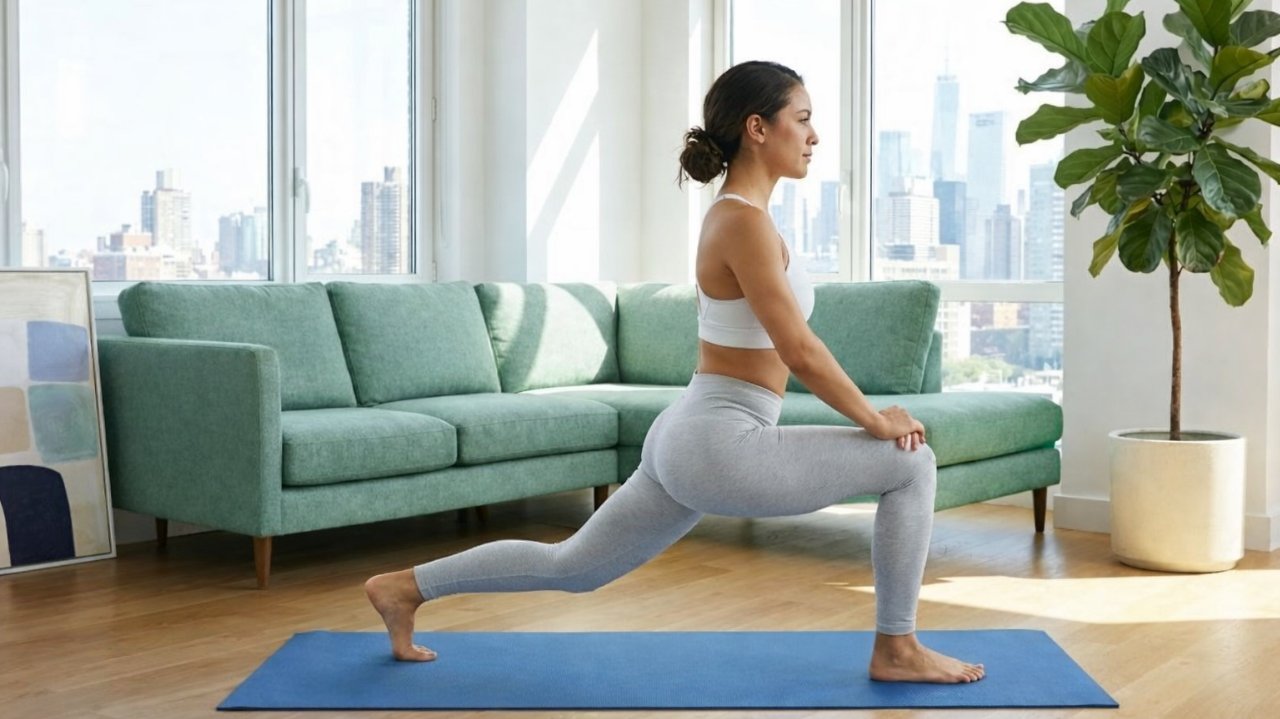
Lunges transform simple steps into purposeful strength training. Step forward and bend both knees together, lowering your back knee toward the floor. Keep your torso upright and your gaze steady. Your front knee should track over your foot, not collapse inward. Push through your front foot to return to standing and alternate sides. Notice differences between legs — unevenness is normal and helps identify areas to strengthen. Reverse lunges are often more knee-friendly, while walking lunges increase coordination. True strength appears in control, not speed.
Glute Bridges: Strengthening the Posterior Chain Naturally
Lie on your back with knees bent and feet flat on the floor. Arms rest comfortably at your sides. Press gently through your heels and lift your hips until your body forms a straight line from shoulders to knees. At the top, squeeze your glutes and hold briefly, then lower slowly with control. This movement strengthens the posterior chain — glutes, hamstrings, and lower back — helping support posture and hip stability. As strength improves, try single-leg bridges to increase intensity.
Calf Raises: Strengthening an Often Overlooked Muscle Group
Stand upright with feet hip-width apart, lightly touching a wall or chair for balance if needed. Lift your heels and rise onto the balls of your feet, reaching as high as possible. Pause briefly, then lower slowly. Your calves act like springs and shock absorbers during walking, running, and climbing. Strong calves improve movement efficiency and stability. For greater range, perform this exercise on a step, allowing your heels to dip slightly before lifting again.
Step-Ups: Turning Everyday Surfaces into Training Tools
Use a stable chair, bench, or low platform. Place one foot on the surface and press through it to lift your body upward. Bring the other foot up, then step down slowly with control. The working leg activates from hip to calf, supporting your full body weight. Step-ups mimic real-life actions such as climbing stairs or stepping onto uneven ground. Increase difficulty by raising platform height, slowing the tempo, or pausing at the top for balance.
Progress Without Weights: Smarter Ways to Keep Improving
Progress in bodyweight training comes from adjusting repetitions, tempo, and leverage rather than adding equipment. Beginners may increase reps or sets, while more advanced trainees can slow movements, add pauses, or use single-leg variations. Jump squats, slow eccentric phases, and deeper lunges create new challenges. Small changes in speed, angle, or balance demand greater muscle engagement and ensure continued improvement without external weights.
Building a Simple, Effective Bodyweight Leg Routine
An effective routine does not require complexity. Select a few key exercises and perform them several times a week with focus and consistency. Rest about 45 to 75 seconds between sets. Choose repetitions that feel challenging but allow proper form. As strength improves, increase reps, sets, or difficulty through slower tempo or advanced variations such as Bulgarian split squats or single-leg bridges. Consistency and control produce better results than complicated planning.
| Exercise | Sets | Reps | Tips |
|---|---|---|---|
| Bodyweight Squats | 3 | 10–15 | Move slowly, keep balance stable, pause slightly at the bottom |
| Reverse Lunges | 3 | 8–12 | Step back gently, keep chest upright and movement controlled |
| Glute Bridges | 3 | 12–15 | Press through heels and squeeze glutes at the top |
| Step-Ups | 2–3 | 8–10 | Use a stable surface and control movement while stepping down |
| Calf Raises | 3 | 15–20 | Lift heels fully and pause briefly at the top |
From Living Room to Park Bench: Training Anywhere, Anytime
Once you begin noticing opportunities, everyday spaces become natural training environments. A curb can serve as a calf-raise platform, a park bench becomes a step-up station, and stairs transform into a lower-body workout. Try incorporating short exercise intervals into walks — pause for squats, use benches for step-ups, and finish with calf raises. Bodyweight training blends exercise into daily life, building practical strength that supports long walks, outdoor activities, and active living. Training without equipment is not a limitation it is a return to functional movement, natural strength, and confidence in your body’s abilities.