
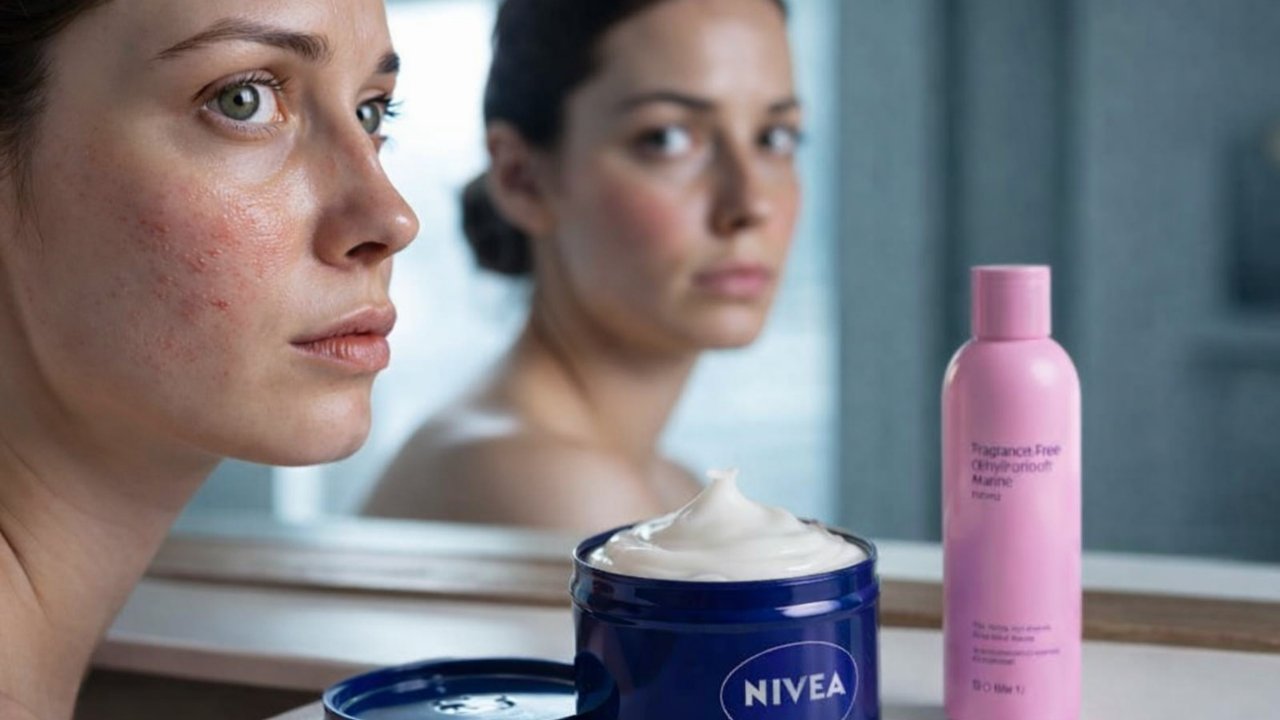
Yet online conversations are shifting. Some praise the cream as a classic skin savior, while others share stories of irritation and clogged pores. Between nostalgia and modern skincare science, a quiet question is emerging: is this traditional formula always the right choice for today’s skin?
Nivea cream’s trusted reputation and what lies beneath
For decades, Nivea cream has been known as a universal moisturizer. Thick, affordable, and widely available, it has been used on dry hands, rough elbows, cracked heels, and even the face. But skincare experts note that its formulation belongs to an earlier era of cosmetics.
The cream relies on heavy occlusive ingredients such as mineral oil derivatives, petrolatum, paraffin, waxes, and fragrance. These components are effective at sealing moisture into the skin, which can be beneficial for very dry areas. However, on facial skin especially oily or sensitive types such density may feel too heavy.
Dermatology observations suggest that daily use of thick occlusive creams on the face may contribute to congestion, irritation, or breakouts in some individuals. The cream itself is rarely the only cause, but it can play a role when used without considering skin type.
When too much moisture becomes a problem
Experts often advise treating the face and body differently. While rich creams may soothe dry body skin, facial skin has a more delicate balance. Heavy layers can trap oils and impurities, sometimes leading to clogged pores or discomfort.
Some people use Nivea cream nightly, inspired by moisturizing trends. Initially, the skin may feel softer and smoother. Over time, however, a few notice small bumps, redness, or tightness subtle signals that the skin may feel overwhelmed rather than nourished.
Skincare professionals suggest using such creams more selectively rather than as an all-over facial moisturizer.
- Patch test first — try on a small area before regular use
- Best suited for dry body zones like hands, feet, elbows, and knees
- Avoid daily full-face use if acne-prone
- Apply a light moisturizer first, then a thin layer only where needed
- Avoid combining with strong actives like acids or retinoids
A traditional cream in a changing skincare world
There is comfort in familiar products. For many, this cream carries memories of simple routines and trusted care. Yet skin, lifestyle, and environmental conditions have evolved. Modern skincare often includes exfoliating acids, retinoids, and exposure to pollution and digital screens — factors unknown when older formulations were created.
Experts are not calling for abandonment, only thoughtful use. The cream may work well as a targeted repair for dry areas rather than a universal facial solution. Some continue using it with satisfaction, while others adapt their routine to lighter, fragrance-free options better suited to their skin.
Ultimately, skin responds individually. If the skin feels calm and balanced, the routine works. If it feels heavy, irritated, or congested, adjustment may be needed. Listening to these subtle signals often matters more than trends or tradition.
Key Point Summary
| Key Point | Detail | Value for Reader |
|---|---|---|
| Traditional heavy formula | Rich occlusive ingredients may feel too dense for daily facial use | Helps explain possible irritation or clogged pores |
| Use selectively | Better suited for dry body areas or occasional targeted application | Allows continued use without harming skin balance |
| Listen to skin signals | Redness, bumps, or discomfort may indicate mismatch with skin type | Encourages mindful, personalized skincare decisions |
FAQ
Is Nivea cream safe to use?
For many people, it is safe when used appropriately, especially on dry body areas. Facial use depends on individual skin type.
Can it cause breakouts?
In some acne-prone or oily skin types, heavy occlusive textures may contribute to clogged pores or congestion.
Is it suitable for daily facial use?
Some people tolerate it well, but many experts recommend lighter moisturizers for everyday facial care.
Where does the cream work best?
It is often most effective on very dry areas such as hands, feet, elbows, and knees.
Should I stop using it completely?
Not necessarily. Adjusting how and where you use it may help maintain comfort while protecting skin balance.