
Yoga offers something different from force or correction. It invites the spine to move, breathe, and rediscover its natural rhythm. Not through strain, but through attention. The following movements are not dramatic or extreme; they are gentle conversations with the body — small shifts that, over time, restore strength, flexibility, and a sense of quiet balance.
The Gentle Wave of Cat and Cow
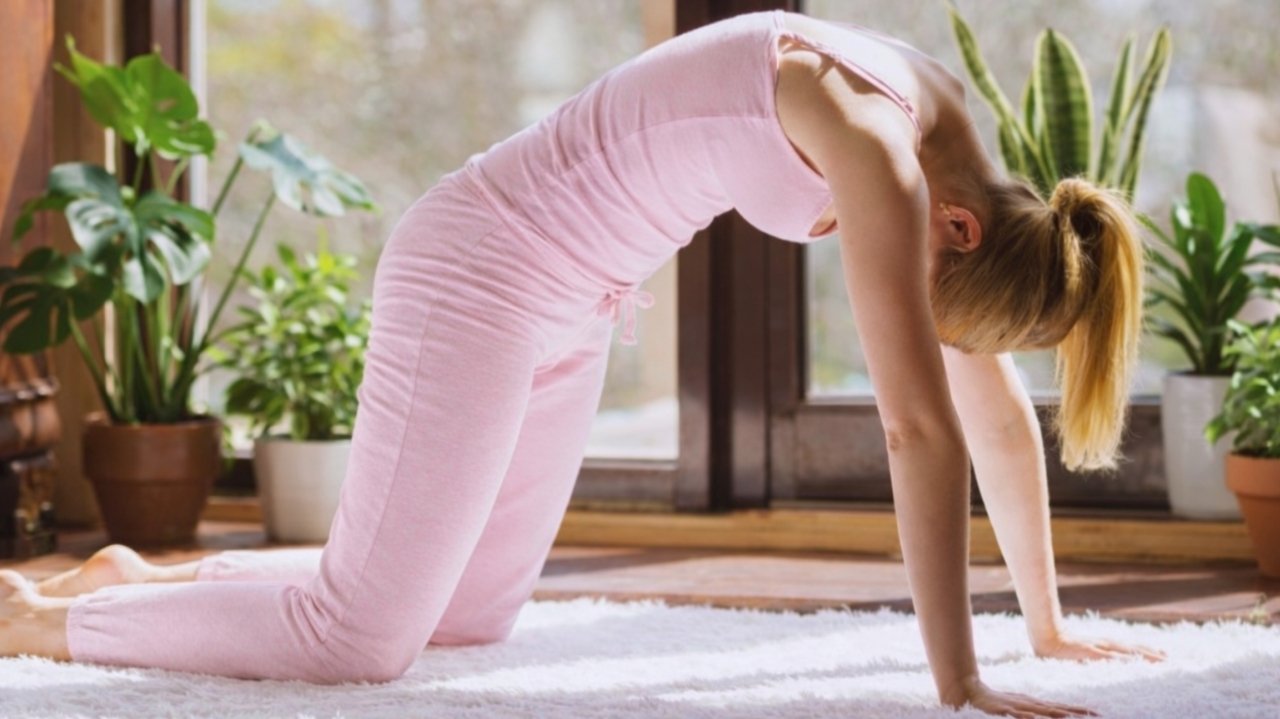
One of the most fluid and reassuring movements in yoga begins on hands and knees, where the body feels supported and grounded. As the spine slowly arches and rounds with the breath, something subtle begins to change. The chest opens, the back softens, and tension that has quietly accumulated along the neck and shoulders begins to dissolve.
This motion mirrors the body’s natural rhythm — expansion and release. With each inhale, the spine lifts and lengthens; with each exhale, it curves inward, letting go. Over time, this simple wave improves mobility and restores a feeling of ease in the back. More than a stretch, it becomes a moment of reconnection between breath and body — something modern life often disrupts.
Length and Lightness in Downward-Facing Dog
There is a sense of spaciousness that arrives when the hips lift and the body forms an inverted V shape. In this position, the spine lengthens naturally, gently decompressing after hours of compression from sitting or standing. The hamstrings and calves awaken, the shoulders strengthen, and the back begins to feel lighter — almost unburdened.
What makes this movement quietly powerful is its balance between effort and release. The arms remain active, yet the head softens. The legs engage, yet the spine stretches freely. Many people notice that with regular practice, posture improves almost unconsciously. The body begins to stand taller, not through force, but through restored alignment.
The Quiet Support of Sphinx Pose
Modern life often pulls the body forward — towards screens, desks, and long hours of sitting. The Sphinx pose gently reverses this pattern. Resting on the forearms, the chest opens and the upper spine awakens, encouraging a soft extension that counters slouching and collapsed posture.
Unlike deeper backbends, this movement feels steady and reassuring. There is no urgency in it. The lower back remains supported, while the breath creates subtle length through the spine. For those who spend much of their day seated, this pose can feel like a gentle undoing — a slow release of accumulated tension and a reminder that the body prefers openness over collapse.
Strength Rising in Bridge Pose
There is something quietly empowering about lifting the hips from the ground. Bridge pose activates the often-neglected muscles of the back, glutes, and core — the very structures that support spinal stability. As the pelvis rises, the chest expands, and the spine forms a smooth arc, strength and openness coexist.
Beyond its physical effect, this movement often brings a sense of grounding. The feet press into the earth, the breath deepens, and the body feels supported from within. Many who practise it regularly notice reduced lower back discomfort and improved posture, not through rigidity, but through balanced strength.
The Awakening Curve of Cobra Pose
Cobra pose introduces a gentle yet awakening extension through the spine. As the chest lifts and the shoulders draw back, the front of the body opens — an area where emotional tension often settles unnoticed. The movement is not about pushing high, but about lifting with awareness and control.
When performed with softness rather than force, Cobra helps lengthen the spine and ease stiffness, particularly in the lower back. It also encourages a subtle psychological shift. Opening the chest often brings a feeling of alertness and quiet confidence — as though the body is remembering how to breathe more fully.
Rest and Release in Child’s Pose
After movement comes stillness. Child’s Pose offers a moment of deep rest where the spine lengthens naturally and the nervous system softens. Knees folded, forehead resting, arms extended — the body feels held, supported, and safe.
This pose is more than physical relief. The slow, steady breath encourages the mind to settle. The lower back gently expands with each exhale, releasing tension stored deep within the muscles. Many practitioners describe this posture as a return — a simple, grounding pause where both body and mind can reset.
Why the Spine Responds to Gentle, Consistent Movement
The spine thrives not on intensity, but on consistency. Regular yoga strengthens the muscles that stabilise the back while improving flexibility in the surrounding tissues. Over time, this balance allows the body to maintain better posture with less effort, reducing strain and discomfort.
There is also a psychological dimension. Slow, mindful movement paired with steady breathing signals safety to the nervous system. Stress levels soften, and the body releases tension it may have been holding unconsciously. Many episodes of back pain are not purely physical; they are intertwined with fatigue, pressure, and emotional load. Yoga, in its quiet way, addresses both.
Gradually, the spine becomes more responsive, more mobile, and more resilient. Movements feel smoother. Sitting feels lighter. Standing feels natural again.
The spine does not ask for perfection only attention. Through small, steady movements and patient breath, it begins to soften, strengthen, and realign itself. And as the body finds its balance, the mind often follows — quieter, steadier, and a little more at ease.